Weights and Measures, Redux
If I keep buying new campers—don't tempt me!—we'll never reach the end of these posts

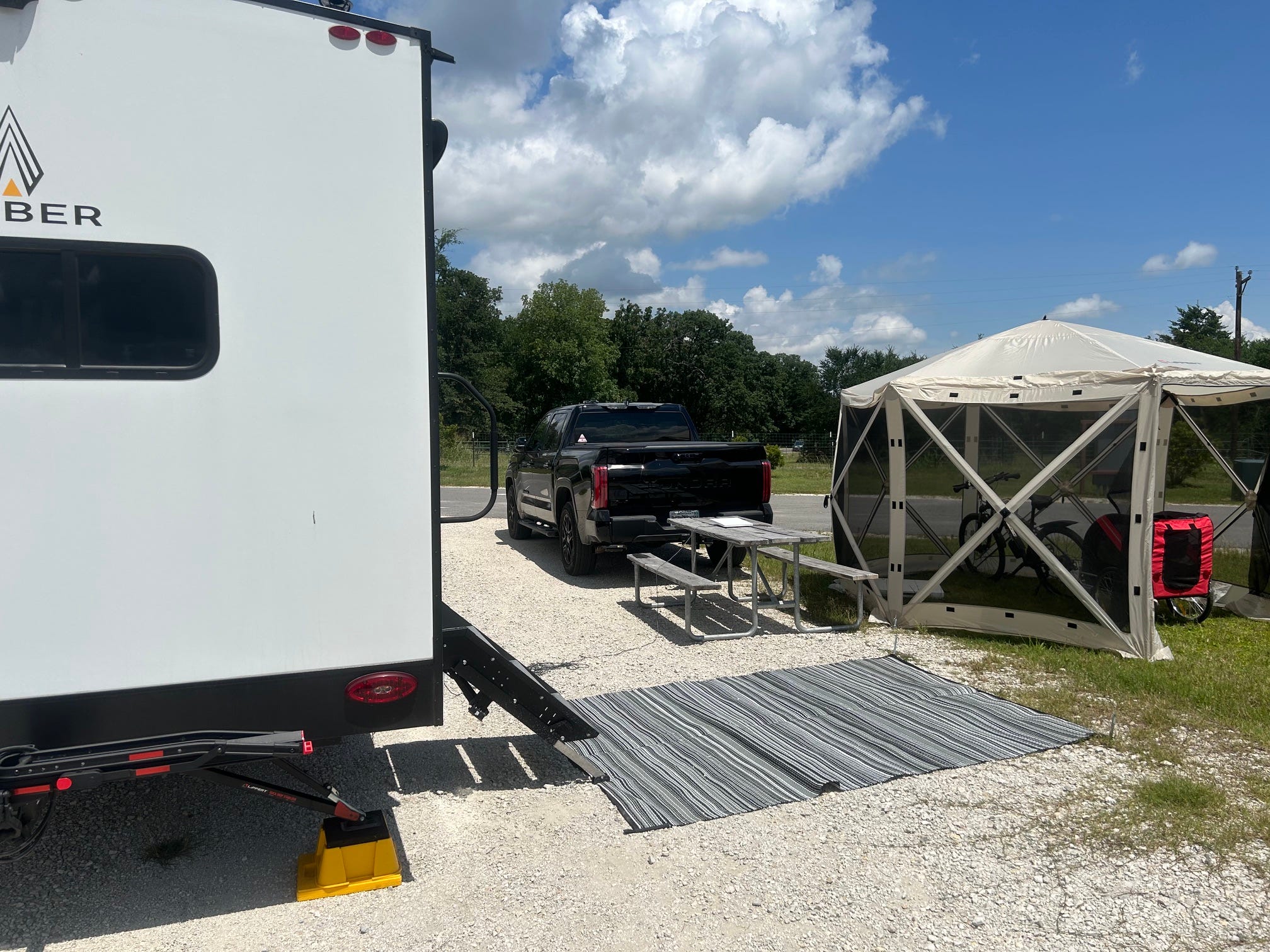
So I got a new camper. I’d say you already know that, but not a week before I set down these words, someone I consider a reasonably close friend wrote to me and said, essentially, what the hell, man, did you get a new camper?
The world, it does not revolve around me. There’s a good life lesson there. If you ever find yourself shying away from something you want to do, thinking, my God, what will people think?, well, here’s the news: You probably don’t have their undivided attention. Proceed.
On Sentimentality and Quick Pivots

Here’s a view from the interior: I’m sentimental about people, about places, about moments in time and the songs that frame up the backgrounds of t…
I love the new camper. I’m not going to marry it or anything, but on Try No. 3, I found the floor plan and the size that supports the way I want to live out here. But this ain’t about that.
This is about having to start all over again when it comes to dialing in the weights of my tow vehicle, my trailer, the hitch, everything. You might recall that we’ve been over this before.
Here we go again.
The truck alone
The first weighing I did was of my 2026 Toyota Tundra, outfitted as it would be on a travel day: Fretless the dog and I occupied the front seats, my (heavy) hitch rode in the rear receiver, and I hauled a cargo carrier filled with wheel chocks, levelers, and such on the front receiver. The rest of the cargo was incidental: ratchet straps and bungee cords, gas, a couple of pairs of shoes, etc.
Here’s a look at what my truck is rated to carry:
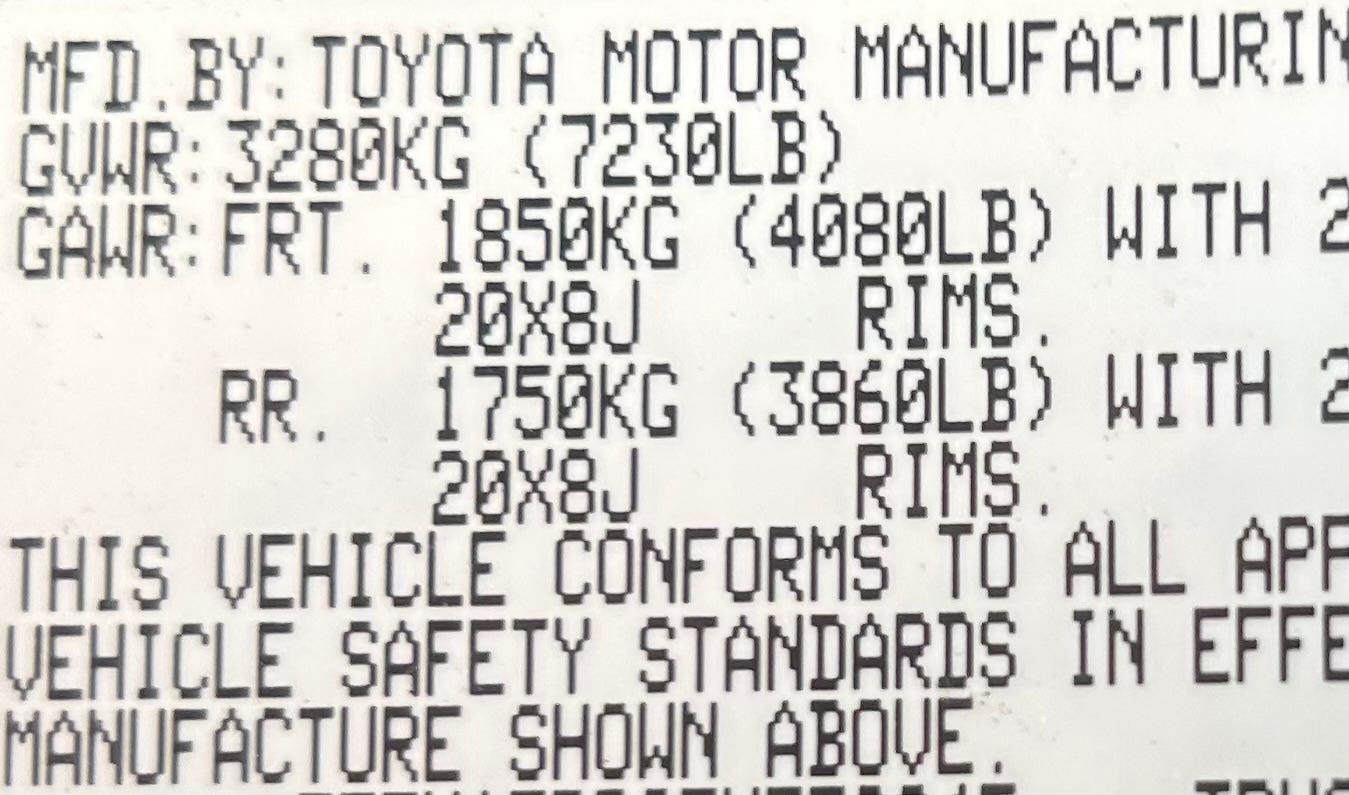
Translated: The fully loaded truck can weigh 7,230 pounds. The front (steer) axle can bear 4,080 pounds. The rear (drive) axle can handle 3,860.
And here’s what a CAT Scale in bucolic Gainesville, Texas, kicked back:
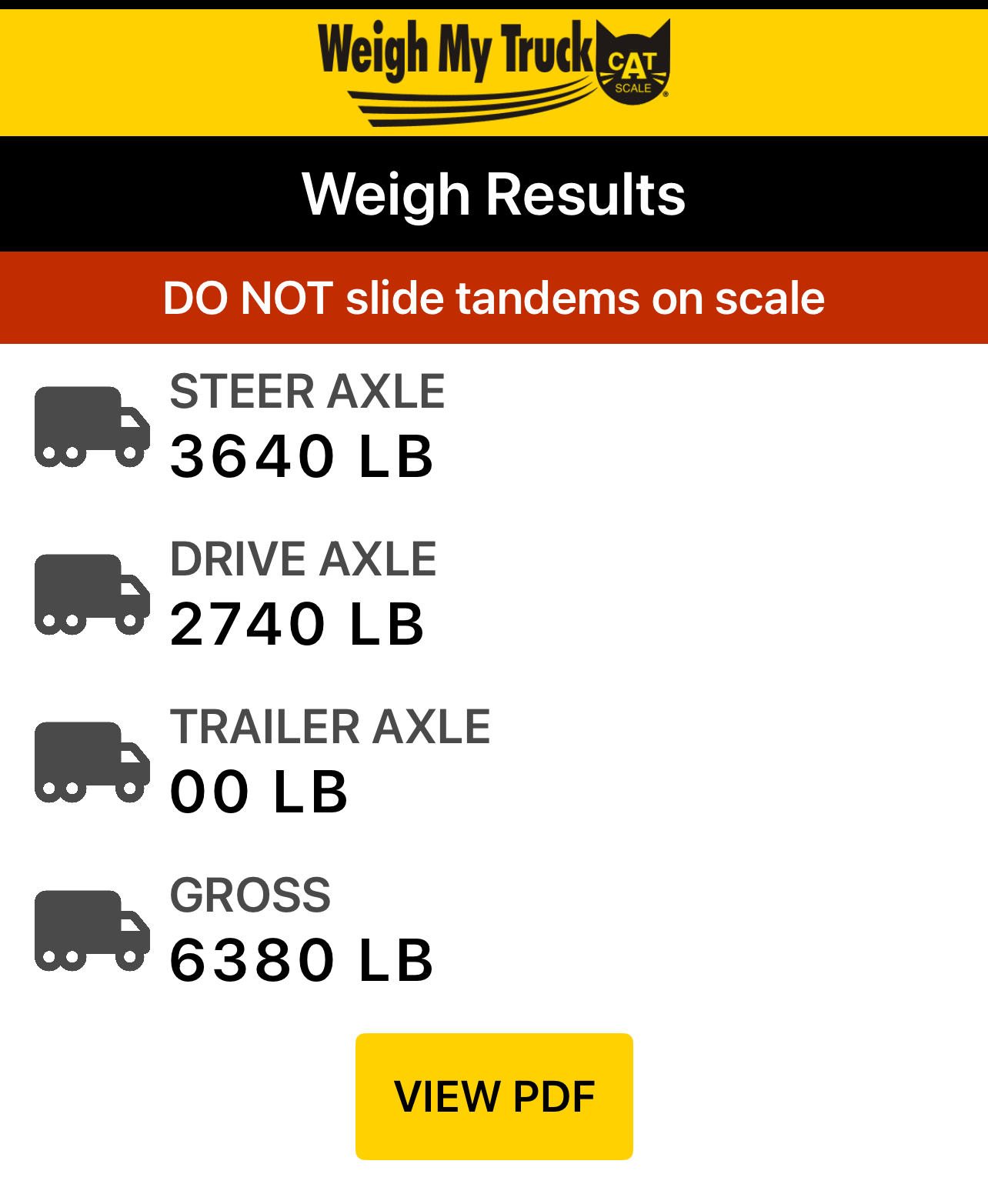
Bottom line: I’ve said before that tow vehicle payload, not towing capacity, is the limiting factor in most setups, and these numbers underscore that assertion. With the truck sitting at 6,380 pounds before the trailer is hooked up, I’m left with only 850 pounds of margin.
Now watch as that quickly disappears.
Truck and trailer without weight distribution
I’m running these numbers first because I want to get a “clean” assessment of my hitch weight; that is, the downward force the trailer applies to my truck when I’m hooked up.
I took a hitch weight reading on the day I took delivery of my Ember 24RLD—when the trailer was not carrying any of my stuff. That measurement came to 630 pounds, which was in line with the published “dry” (unencumbered) hitch weight of the Ember.
Now, of course, I’m carrying items in the front pass-through compartment, which surely affects the hitch weight. And the entire trailer is now loaded for travel, imposing further hitch effects. As ever, I’ve tried to be smart about what goes where: heavy, dense items low inside the trailer, positioned over the trailer axles, only what’s necessary in the fridge and pantry, etc.
Here’s where that got me:
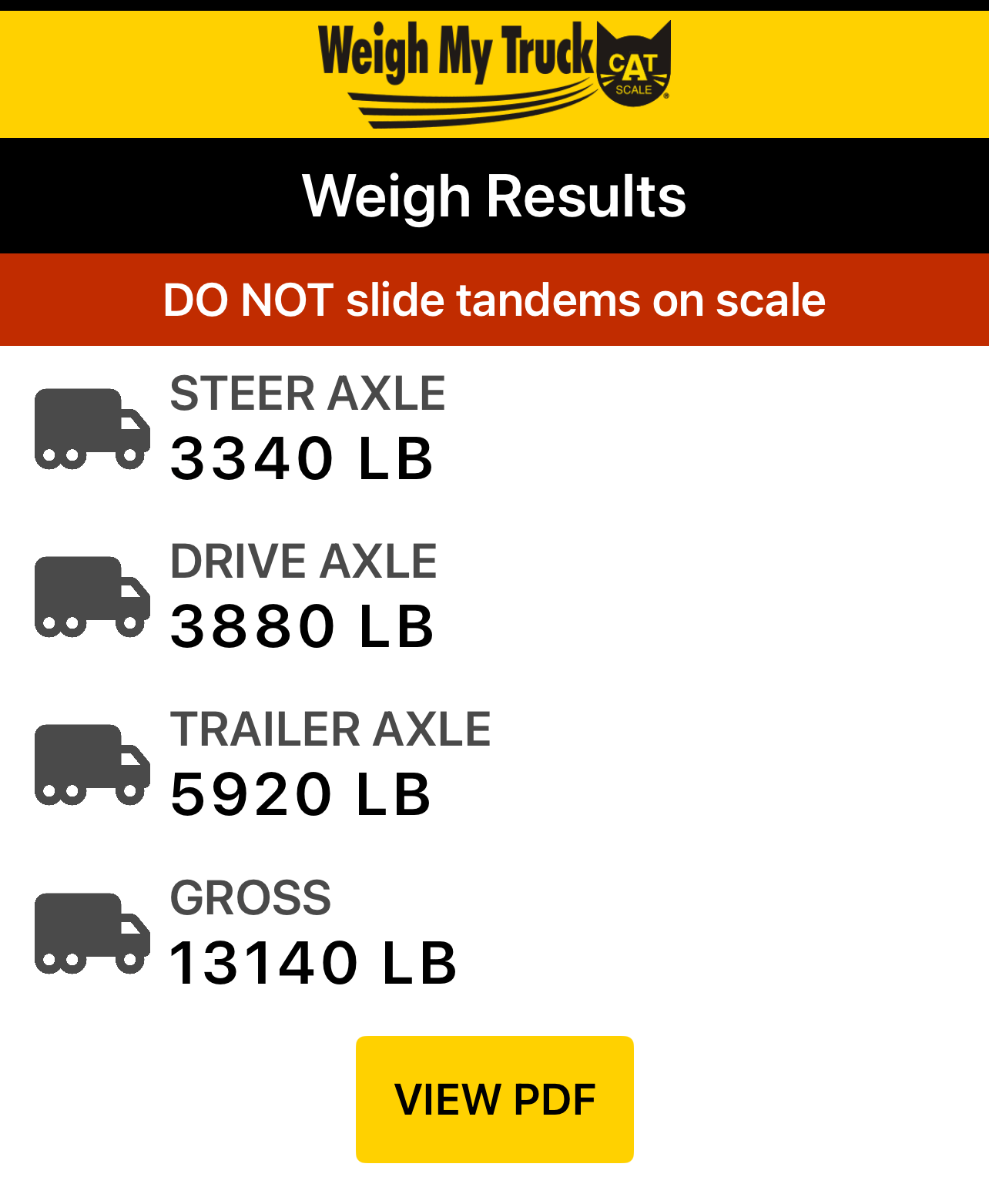
If I subtract the truck’s total weight without the trailer (6,380 pounds) from the total with the trailer (7,220 pounds, or steer axle weight plus drive axle weight), I arrive at the hitch weight:
840 pounds.
I’m down to 10 pounds of margin on payload.
But wait, there’s more!
My drive axle is 20 pounds over the mark, while my steer axle is 740 pounds under. Not only that, but the presence of the trailer displaced 300 pounds of weight that was previously being borne by the front axle. A weight distribution hitch—see the next section—is designed to put some of that weight back. We’ll see.
(Oh, and from these numbers I can determine the trailer weight. I simply add the 5,920 pounds on the axles to the hitch weight of 840. Trailer weight: 6,760, well under the Ember’s gross vehicle weight rating of 7,395 pounds. I can carry and pull more weight in the trailer, but I can’t let that spill into the truck’s payload.)
(One more oh: My hitch weight percentage—that is, the percentage of the total trailer weight being borne by the hitch—is absolutely golden: 12.4%, almost dead center in the 10-15% sweet spot.)
Truck and trailer with a weight distribution hitch
Here’s a little story from when I was shopping for the Ember. While perusing the lot, I found a Rockwood trailer I really liked. Its gross vehicle weight rating (GVWR) was well within the capabilities of my Tundra. But I knew there was a missing piece, so I asked my salesman: What’s the dry tongue weight of this trailer?
The answer—814 pounds—sent me in another direction. I’d already looked at the Ember, so I asked to go back and give it some more scrutiny. And, ultimately, I bought it. Not just for the hitch weight, but that certainly was a major factor. As is made plain in the previous sections, that Rockwood hitch weight would have erased almost all of my available payload. Gone!
My salesman, of course, advocated for the Rockwood (among other things, it was about $10,000 more than I paid for the Ember, so there’s the impact on his commission). He said a distribution hitch could take away some of that weight.
I liked the guy, but that simply is not true. We live in a physical world, not a magical one. You can’t blink your eyes and make something that physically exists disappear into the ether. A weight distribution hitch—stay with me now—redistributes weight. Sends it somewhere else. By design, it goes from the rear of the tow vehicle to the front.
But it’s still frickin’ payload on the frickin’ truck. Pardon the saltiness, but the whole “make it disappear” thing is a common—and commonly bad—assertion from someone who ought to know better.
Anyway, here are the numbers on my setup when a weight distribution hitch is used:
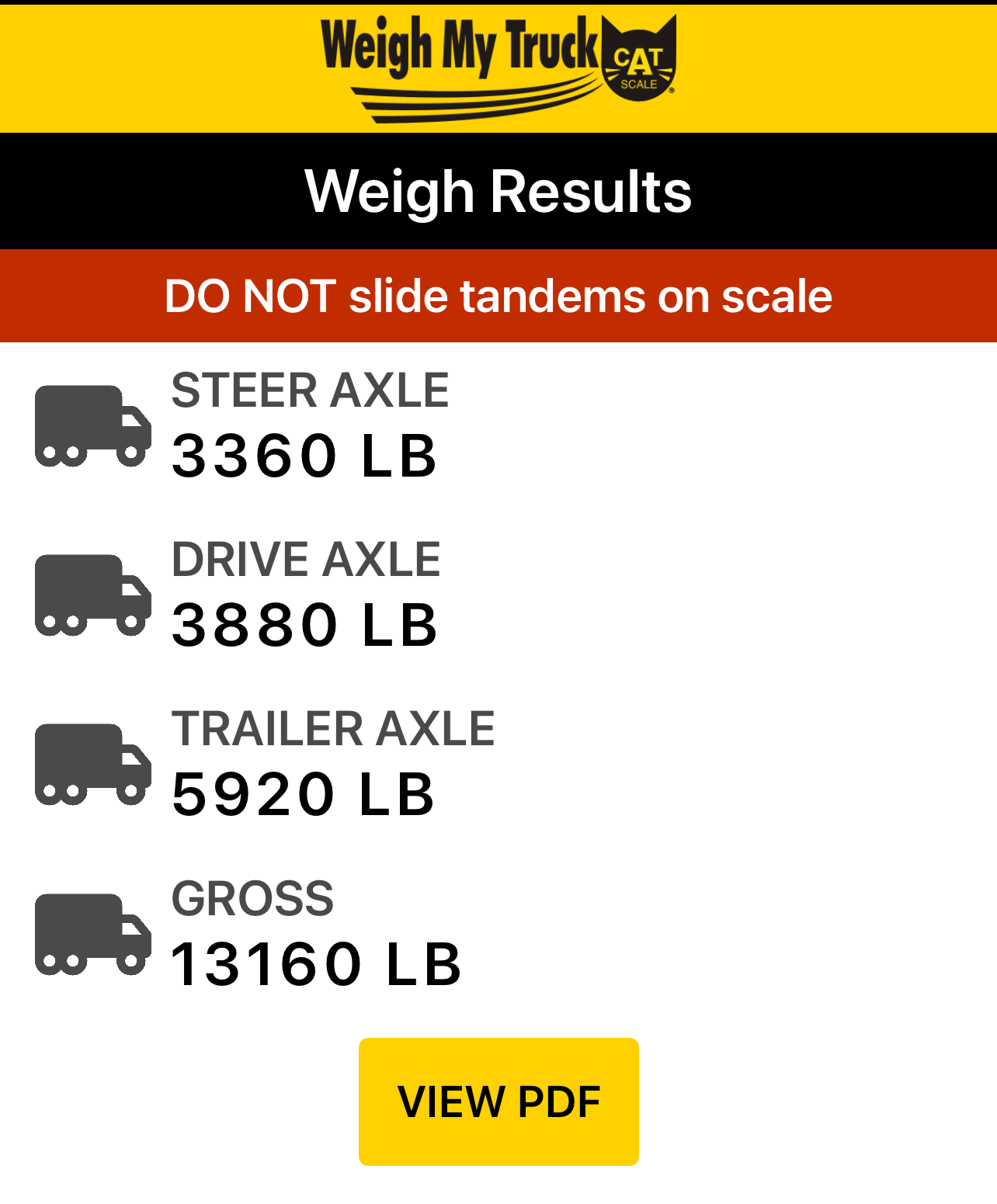
Didn’t do much, did it?
The whole setup weighs 20 pounds more than it did before, and that weight is riding on the front axle, not the back. But I’ve received no relief on the overage on that back axle, nor has any appreciable weight been returned to the front, so I haven’t really gained any breathing room where it counts. About the only benefit I see from the weight distribution hitch is the presence of sway bars, which will give me a security blanket under normal driving conditions and not even a smidgen of help in extreme conditions that could tump me over. I’m screwed either way in that event.
Here’s where I admit to an unpopular opinion: I’m not a big fan of weight distribution hitches when they’re used as a panacea (the emphasis here is important) by people who aren’t giving proper scrutiny to their load. For sure, they can be useful in some situations as a geometry tool, but smart balancing in the first place can largely achieve the same effects, without all the weight and tension introduced by the weight distribution hitch.
The immutable laws of physics—not to mention the numbers here—tell me that a well-balanced load, piloted at a prudent speed, is the single biggest factor in eliminating trailer sway. I’d rather get the math right and cruise down the road with a simple, effective setup than rely on extra weight on my bumper and tension from a weight distribution hitch to do it for me. These numbers suggest that I can load more weight into my front cargo carrier, shuffle a little weight from the trailer’s front pass-through compartment into the main area, gain some balance, and perhaps even get a bit of breathing room on truck payload.
The math on my setup isn’t quite right, but I’m very, very close.
This just in: I’m there
I wrote the preceding line about a week before writing this one. I’ve dialed things in further. Take a look.
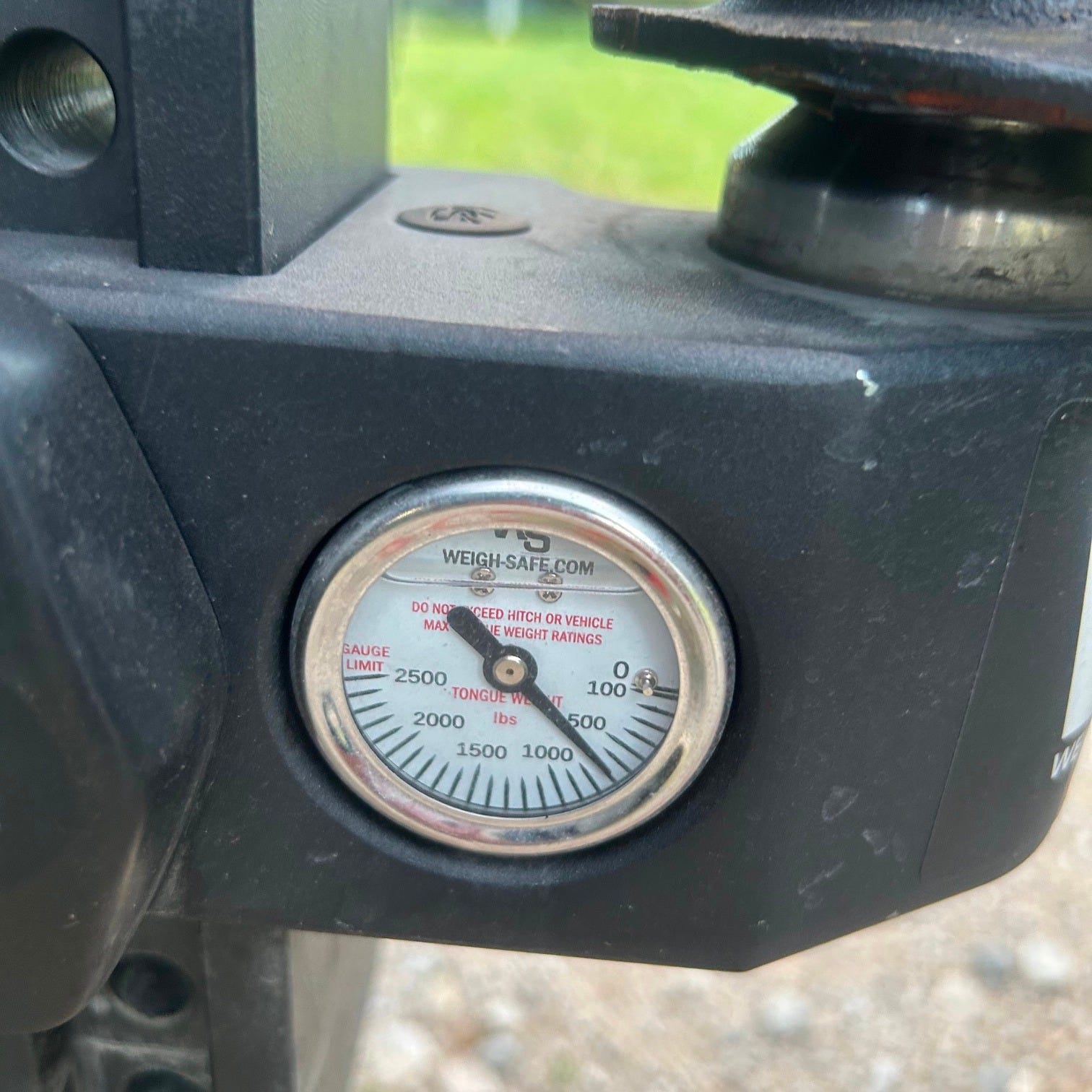
First things first: I ditched the weight distribution hitch. It wasn’t doing anything for me. More than that, I can make a strong case that it was working against me in some significant ways.
I’m back to a regular old friction-style hitch. I didn’t like the 840 pounds on the tongue, so I reworked my load, and what do you know? I’ve got the hitch weight down to around 675. I was hoping for 720.
But the true test is what that means in the fuller picture. Check out the latest CAT Scale ticket:
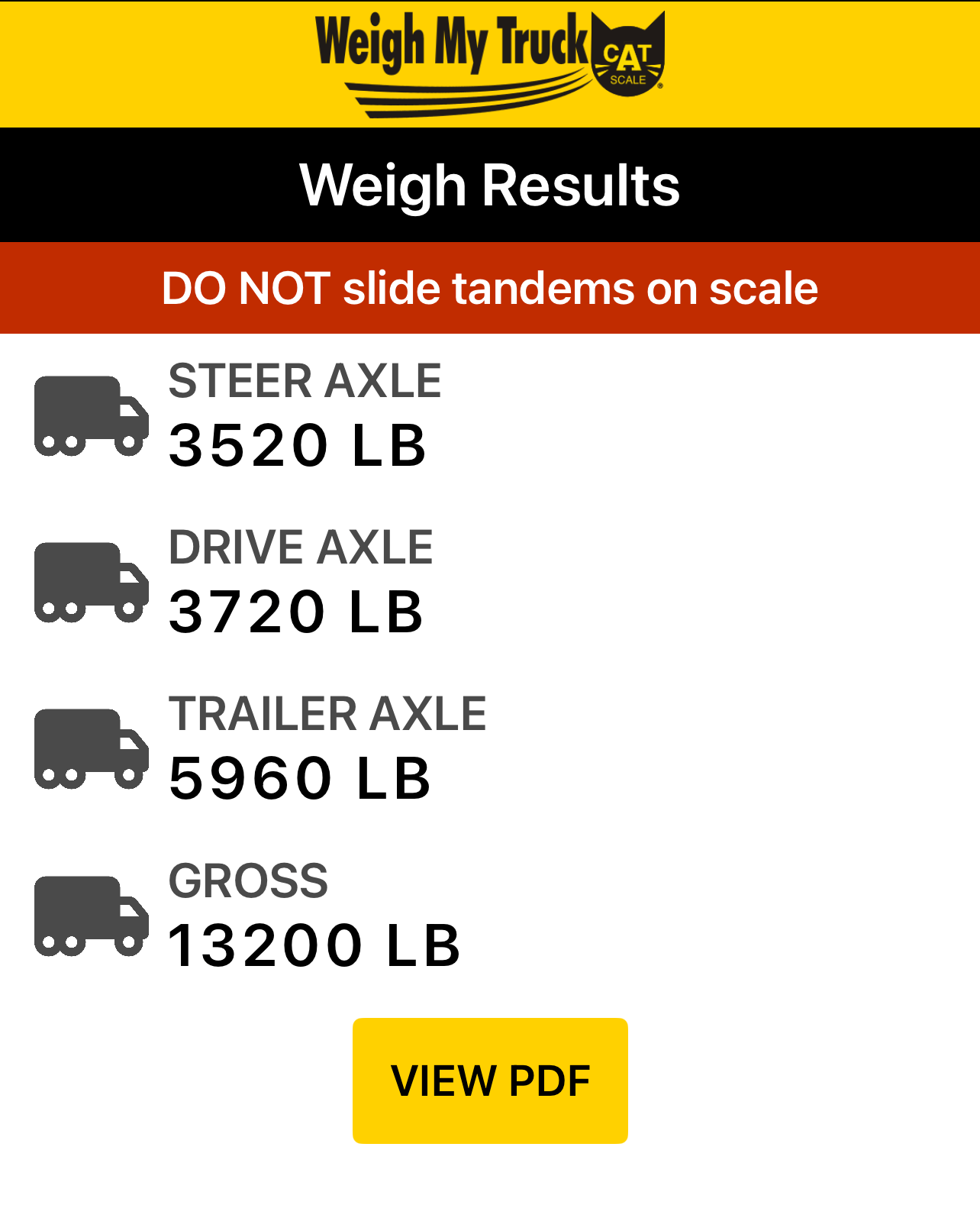
A lot of good things are happening here: The weight on the trailer axles is 5,960 pounds. Add that to the tongue weight, and the trailer’s full weight is sitting at 6,635. That puts my tongue weight percentage (675 divided by 6,635) at 10.2%. I’d hoped for something a little higher, but that will work.
Now, check out the steer axle: I redistributed weight to the front of the pickup, and now I’m not unloading nearly as much weight up front when the trailer is hooked up. It’s pretty well balanced with the rear axle, which has come down from 3,880 pounds to 3,720 because I ditched that weight distribution hitch and all its heaviness.
I’m still 10 pounds over on truck payload, but that’s negligible, and it’ll be corrected soon. The weight distribution hitch goes into a garage when I get home. Goodbye, roughly 140 pounds!
The most important thing, of course, is how the setup behaves in the wild. On June 12, I drove 500-plus miles from North Texas to Southern Colorado with this very setup. Lots of wind. Lots of passing semis. The trailer responded beautifully. When air was displaced around it, the trailer reacted—then it snapped back into place. Because physics. Because on-point loading.
There’s not a thing that the weight distribution hitch could have done for me that I didn’t already engineer into my setup.
I’ll trust physics all day long.
What we talk about when we talk about
‘half-ton towable’
My Tundra, a high-capacity half-ton pickup, presents an interesting quandary with trailers the length and weight of my Ember. In terms of tow capacity, the roughly 7,400 pounds the trailer can safely weigh are well within the Tundra’s margins (a little more than 11,000), but payload capacity must be carefully managed even when a lighter trailer is being pulled.
So when an RV salesman, for example, tells you that a trailer you like is “half-ton towable”—a marketing phrase, not a physical principle—make damn sure you’re getting every number that’s going to either confirm or contradict that assertion:
Maximum trailer weight, which should be mapped to the towing capacity outlined in your truck’s owner’s manual.
Payload capacity, which is also in the owner’s manual and on a sticker affixed inside the driver’s side door. This is the real choke point.
Hitch weight, which is going to count against your payload.
The Rockwood I liked, for example, was shorter than and lighter than my Ember. But its unencumbered hitch weight was nearly 200 pounds heavier, and that simply was not going to work.
My trailer is half-ton towable. With this truck. With this setup. And just barely. The Rockwood would have blown me out of the water.
I first took note of the Ember when I saw this video from Josh the RV Nerd. He talks at length about my specific model (albeit the pre-production version of it) and the general idea of half-ton towability. Josh is a consistent voice in advocating for the importance of monitoring payload and towing safely. His stuff is always worth a watch.
Stay safe out there, folks.
The math is looking great! Nicely done!